
AlphaTrading Review
AlphaTrading markets itself as an established brokerage platform offering access to multiple financial markets and personalized trading services. Despite this positioning, a detailed review of the available information shows a pattern of opacity, missing regulatory oversight, and structural features commonly associated with pseudo-brokers. This article provides a stricter and more direct assessment of AlphaTrading, combining analytical paragraphs with structured points for clarity.

Company Background
AlphaTrading claims to have operated since 2007, presenting this date as proof of reliability and experience. There is no independent evidence to support this claim. No historical regulatory filings, archived operational records, or credible media references confirm such a long presence in the financial industry.
Key issues related to the company’s background include:
- reliance on self-declared history rather than verifiable documentation;
- absence of public records confirming long-term activity;
- lack of transparency regarding the company’s early operations.
Such inconsistencies strongly suggest that the stated founding date is part of a marketing narrative rather than a factual timeline.
Regulation and Legal Status
AlphaTrading operates without any confirmed regulatory authorization. Although a U.S. address is mentioned on the website, the broker is not licensed by the SEC, CFTC, NFA, or any other recognized financial regulator.
This creates several critical risks:
- no legal framework governing client fund protection;
- no supervisory authority monitoring business practices;
- no formal dispute resolution mechanism.
Operating as an unregulated broker allows AlphaTrading to function outside established financial standards and removes any meaningful protection for clients.
Trading Instruments
The platform advertises access to a wide range of instruments, including Forex, commodities, cryptocurrencies, indices, and U.S. equities. While this list appears comprehensive, it lacks supporting details.
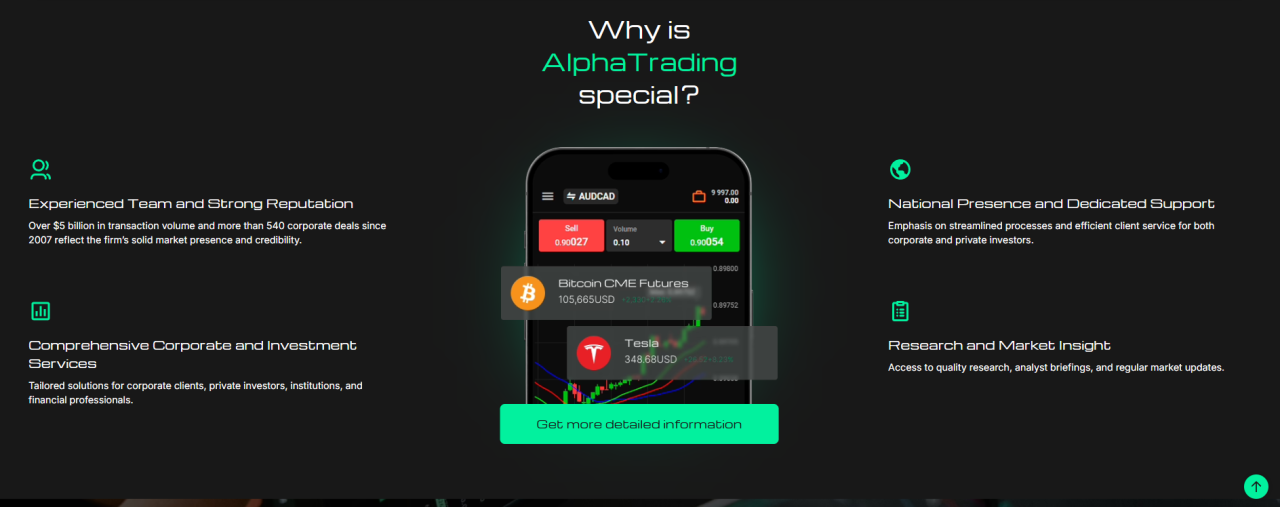
Notably missing information includes:
- contract specifications and lot sizes;
- margin requirements and leverage parameters;
- pricing methodology and execution conditions.
Without these details, clients cannot properly evaluate trading costs or understand their exposure to risk.
Trading Platform
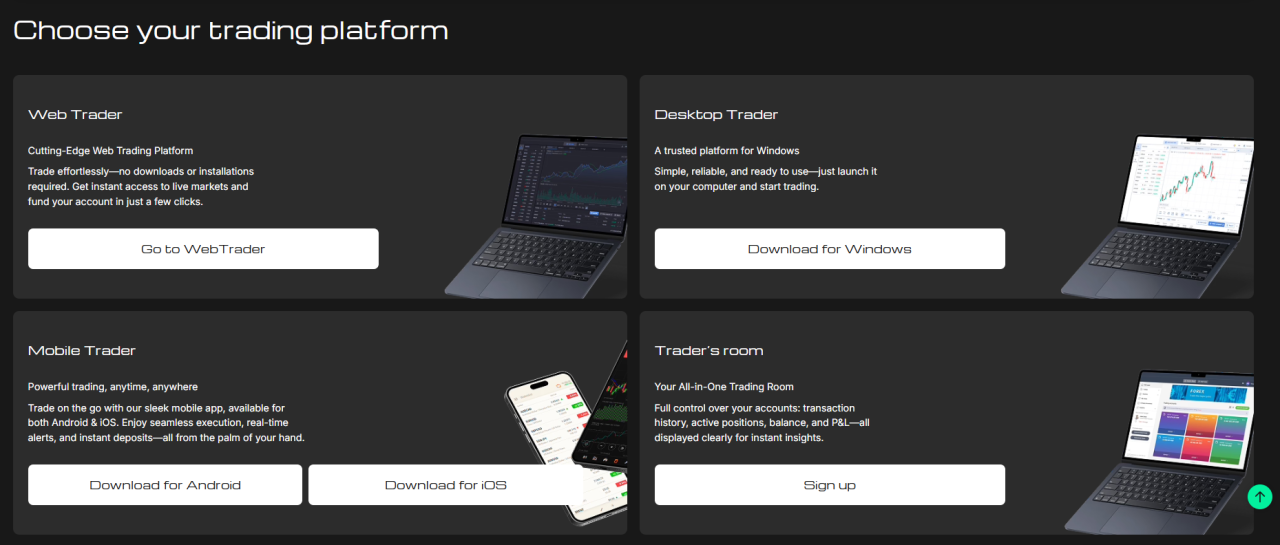
AlphaTrading relies on a proprietary trading platform accessible via web, desktop, and mobile versions. Well-known third-party platforms such as MetaTrader 4 or MetaTrader 5 are not supported.
Several platform-related concerns stand out:
- no disclosure of the platform’s developer or independent audits;
- no information about liquidity providers or market access;
- no explanation of the order execution model.
The platform infrastructure is linked to external domains typically used by generic trading software providers. This setup enables full internal control over trades, pricing, and account balances, raising serious doubts about whether trading activity reflects real market conditions.
Account Types
AlphaTrading offers multiple account tiers with increasingly attractive conditions, particularly for higher-level accounts that promise tighter spreads and personal analysts.
At the same time, the broker withholds essential parameters:
- minimum deposit requirements are not published;
- leverage limits are not disclosed;
- margin call and stop-out rules are not explained.
This selective disclosure allows sales managers to adjust conditions individually, often after funds have already been deposited.
Deposits and Withdrawals
The broker states that deposits and withdrawals can be made via bank transfers, cryptocurrencies, and online payment systems. Beyond this basic statement, no concrete rules are provided.
Key issues include:
- undefined withdrawal fees;
- no stated processing times;
- unknown transaction limits;
- unclear grounds for withdrawal rejection.
User complaints suggest that withdrawal requests may face delays, additional payment demands, or account restrictions. Such practices are consistent with high-risk brokers that prioritize incoming funds over client withdrawals.
Sales-Focused Client Management
AlphaTrading emphasizes personal managers, proprietary analytics, and trading signals, especially for premium accounts. These features are marketed as professional support but often serve as tools for increasing deposits.
Common patterns reported by users include:
- pressure to add funds to access “better” conditions;
- assurances of improved results without accountability;
- shifting responsibility for losses entirely onto the client.
This approach reflects a sales-driven operation rather than a transparent brokerage service.
Conclusion
AlphaTrading exhibits multiple structural and operational warning signs associated with unregulated and potentially fraudulent brokers. The absence of licensing, opaque legal status, proprietary platform with full internal control, lack of transparent trading conditions, and reported withdrawal difficulties indicate a platform operating outside accepted industry standards.
From a risk perspective, AlphaTrading cannot be considered a reliable broker. Engagement with this platform exposes clients to a high likelihood of financial loss without effective legal or regulatory protection.
 All AlphaTrading Reviews